






Design Strategies That Support Responsible Gambling

In the modern iGaming industry, responsible gambling involves a range of disciplines, including marketing, customer support, and regulatory compliance. What connects these areas is effective design. Well-structured design plays a crucial role in strengthening player trust, improving retention, and supporting social responsibility within gaming platforms.
As the industry continues to expand and evolve, responsible gambling has become a core priority for operators. It allows companies to build sustainable business models, maintain compliance with regulatory requirements, and present a responsible image of the industry to policymakers, regulators, and the public.
Understanding responsible gambling
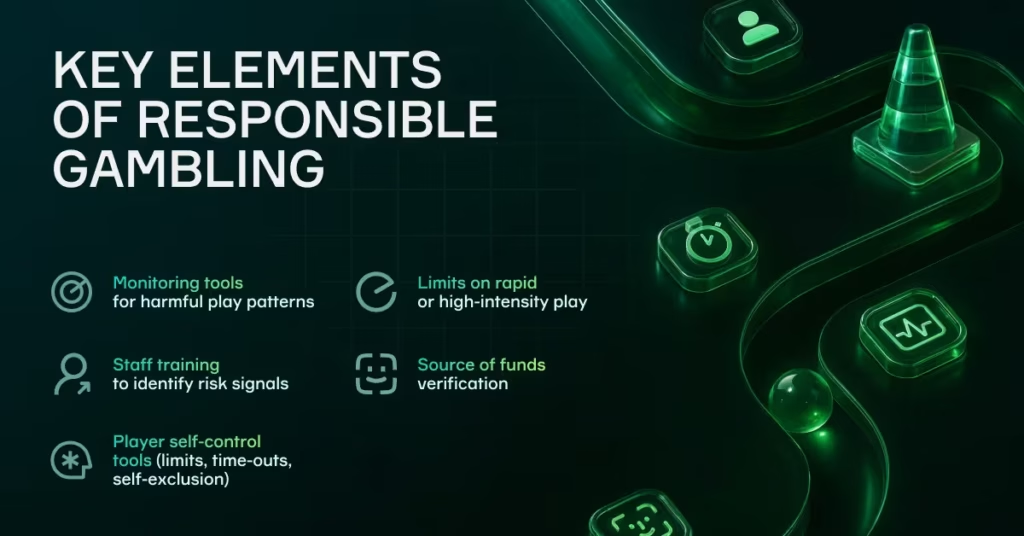
Within this broader discussion, an important question naturally arises: what exactly is responsible gambling (RG)? The concept covers a wide range of activities. These may include developing safe yet effective marketing campaigns, reducing the industry’s reliance on a small number of high-spending players, and ensuring that terms and conditions remain clear while complying with strict consumer protection standards. Creating and implementing responsible gambling policies that also support business performance can therefore be a complex task.
At its core, responsible gambling refers to a framework of principles, policies, and tools designed to ensure that gaming remains a safe and enjoyable form of entertainment. The goal is to engage as many players as possible while also protecting them from potential harm and maintaining transparency, fairness, and ethical standards across the gaming experience.
For online gambling operators, adopting responsible gambling practices is not only a regulatory obligation. Today, it has also become a strategic choice that can influence long-term business development. This may seem counterintuitive because RG initiatives often require financial investment. Implementing technologies that monitor behaviour patterns associated with problem gambling, training customer support teams to verify sources of funds, or introducing systems that limit high-speed gameplay for newly registered users all require resources, time, and operational commitment to function effectively.
Responsible design in practice: MEGA as a gamification solution
MEGA represents an example of how responsible gambling principles can be integrated into a high-performance product environment.
Among major technology providers in the iGaming sector, Soft2Bet has positioned its Motivational Engineering Gaming Application (MEGA) as a gamification solution that combines innovation with responsible practices. The system demonstrates how technology can support business growth while remaining aligned with strict rules governing promotional messaging, flexible rewards and intelligent bonus triggers.
MEGA integrates flexible design and advanced functionality, providing entertainment while also maintaining a high level of security for operators and players.
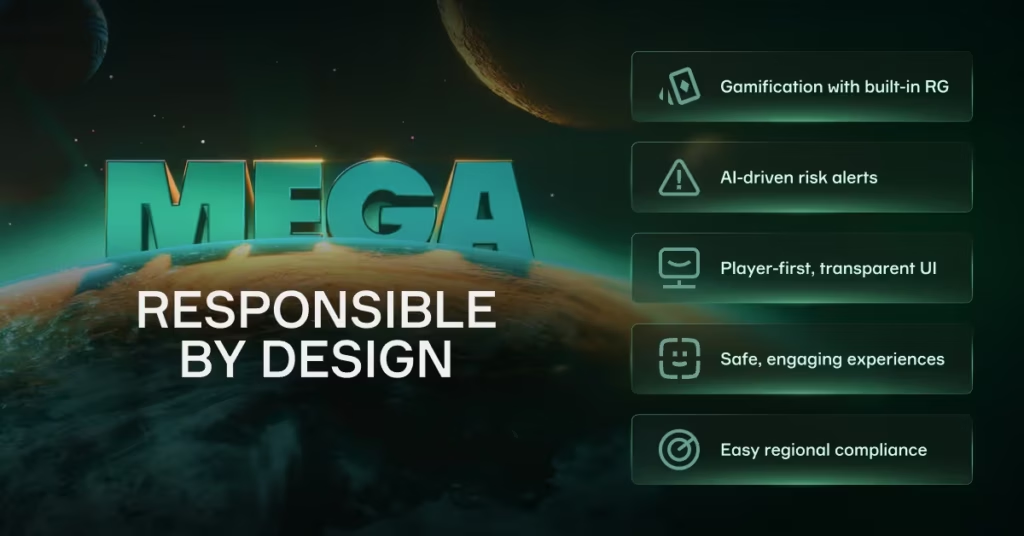
- Soft2Bet’s design strategy embeds responsible gambling tools directly into the platform’s interface. Features such as play-time monitoring, deposit limit settings, and transparent account activity records are integrated into the player dashboard, ensuring that these tools remain clearly visible and easy to use.
- Using data analytics, the MEGA platform also provides predictive monitoring tools that help identify early signs of potentially problematic gambling behaviour.The system generates real-time alerts, enabling operators to respond quickly while maintaining a respectful and balanced player experience.
- The interface emphasises accessibility and player control. Users receive a clear overview of their activity and can manage their playing behaviour and deposit limits intuitively. This user-focused design approach reflects the broader industry goal of making responsible gambling practical and easy to understand.
- MEGA also helps operators meet regulatory obligations more efficiently. The platform includes built-in compliance configurations that allow operators to adapt responsible gambling policies according to specific jurisdictional requirements. This architecture reduces administrative workload while ensuring that each platform operates within the regulatory framework of its target market.
For Soft2Bet, through a flexible and modular system, gamification helps transform players into engaged users who may eventually become strong supporters of the platform.
The effectiveness of this approach comes from its emphasis on adaptability and thoughtful design. The system is built around key motivational factors such as purpose, challenge, recognition, community participation, and rewards.
The architecture of MEGA is fully customisable, allowing operators to adjust the experience for different player groups, markets, and business objectives. The user interface is designed to give players a strong sense of control over their gaming experience. Personalised missions and challenges adjust dynamically based on player activity and preferences, ensuring that difficulty levels and rewards remain balanced to maintain engagement.
Players can also customize and upgrade avatars, which visually represent their status and involvement within the platform. These avatars evolve alongside the player’s activity, unlocking additional abilities, access privileges, or social benefits. This form of visual progression strengthens emotional engagement and encourages players to return regularly. As a result, users log in not only to play but also to advance and interact with the MEGA system.
Social features: Leaderboards, chat and community interaction
Human motivation is often influenced by social interaction. MEGA incorporates this understanding by integrating social elements directly into gameplay.
Features such as leaderboards, live chat systems, team-based missions, and community challenges help create a shared environment where players feel connected to a broader community.
Live chat and collaborative gameplay features encourage real-time communication, cooperation, and friendly competition. Players can celebrate achievements together, collaborate on shared objectives, or compete with one another in a structured environment.
These social dynamics often lead to increased engagement, longer platform sessions, and stronger brand loyalty.
At a time when digital communities play an important role in online platforms, MEGA’s social functionality serves as an effective tool for strengthening user engagement.
Content-driven growth beyond bonus strategies
Many iGaming operators rely heavily on rewards, promotions, and cashback incentives to attract and retain users. While these strategies can improve short-term performance indicators, they often lead to lower-quality traffic, players focused solely on promotional offers, and high churn rates.
Over time, this approach can become financially unsustainable and may also affect brand perception.
Soft2Bet and the MEGA platform take a different approach by focusing on content-led engagement. By enhancing the gameplay experience and increasing the depth of gamified content, the platform reduces dependence on aggressive bonus-driven marketing strategies.
Players remain active on the platform because they enjoy the interactive and gamified experience, rather than simply responding to promotional incentives.
This strategy encourages repeat visits and supports longer customer lifecycle periods. It also aligns more closely with current regulatory expectations, which increasingly limit aggressive promotional practices and emphasise stronger consumer protection.
Design as a tool for responsible engagement
Design has always influenced how users interact with digital platforms. Through thoughtful design choices, companies can guide users toward certain sections of websites or applications and shape the way they engage with online services.
In the iGaming industry, the design of online casino and sports betting interfaces plays an important role in supporting both business performance and responsible gaming objectives.

Well-structured design can also guide players toward safer behaviours by reinforcing player protection measures and encouraging them to take breaks or adjust deposit and loss limits.
Soft2Bet incorporates several design principles to support these objectives.
- Visual hierarchy and user awareness: Visual hierarchy helps highlight essential control tools such as session timers or deposit limit settings without overwhelming the user interface. When these options are clearly visible and easy to access, players are more likely to use them, helping to establish healthier gaming habits over time.
- Feedback mechanisms and behavioural nudges: Subtle reminders can also help guide player behaviour. Notifications after extended sessions or alerts when approaching deposit limits encourage players to pause and consider whether they wish to continue.These design elements provide gentle prompts that support self-awareness without disrupting the user experience.
- Managing cognitive load: Reducing unnecessary complexity in interface design also supports responsible gaming objectives. A clean and intuitive interface allows players to make more informed and balanced decisions while maintaining a sense of control over their activity. Highly stimulating environments may encourage impulsive behaviour, whereas balanced and calm layouts promote more thoughtful engagement with the platform.
By designing platforms around player behaviour and habits, operators can strengthen communication with users and build stronger relationships with their audience. In doing so, responsible gaming becomes more than a regulatory obligation and instead becomes an integrated and engaging part of the overall gaming experience.
Responsible gambling tools and policies
A strong responsible gambling framework requires both clear principles and effective technological implementation. Several key tools help operators support responsible play while maintaining compliance.
- Deposit limits: Deposit limits are among the most widely used responsible gambling tools. They allow players to set daily, weekly, or monthly spending limits, helping them manage their gaming budgets more effectively.
- Time and session controls: Session timers and “reality check” notifications remind players to review the duration of their activity and take breaks when necessary. When these tools are integrated naturally into platform design, they support awareness and self-control without interrupting the gameplay experience. Such reminders are particularly useful because players may not always realise how much time or money they have spent during extended gaming sessions.
- Loss and wagering limits: Loss limits allow players to restrict how much they can lose or wager during specific time periods. When integrated into clear and accessible interface designs, these tools encourage transparency and help players maintain control over their gaming behaviour.
- Behaviour monitoring and automated alerts: Modern responsible gambling systems increasingly rely on machine learning to identify patterns associated with risky behaviour. These may include attempts to recover losses, unusually frequent deposits, or extended playing sessions. Early detection enables operators to provide personalized notifications or support messages that encourage players to reassess their activity.
- Self-exclusion and cooling-off options: Effective RG policies also include flexible self-exclusion and cooling-off tools. These options allow players to suspend their accounts for specific periods of time, helping them regain control over their gaming habits. In many competitive markets, access to national self-exclusion registries has become a standard regulatory requirement.
- Access to support resources: Operators must ensure that support organisations and helplines are clearly visible and easily accessible within their platforms. Providing direct access to assistance services demonstrates a commitment to player well-being that goes beyond basic compliance requirements.
When implemented carefully, these tools improve both regulatory compliance and the overall user experience. They also reflect the broader philosophy of an operator: whether the business focuses on sustainable long-term growth based on transparency and trust, or prioritises short-term revenue at the expense of player protection.
Conclusion
Encouraging responsible gambling through thoughtful design represents a sound and sustainable business strategy. By integrating RG practices throughout the product development cycle—from platform design to marketing—operators can achieve regulatory compliance, build trust with players, and support long-term customer relationships.
Design strongly influences how the public perceives iGaming brands, but it also contributes to sustainable commercial development. Operators that rely exclusively on short-term gains from poorly monitored player behaviour rarely achieve long-term stability.
Transparent responsible gambling policies, supported by effective tools and partnerships with support organisations, form the basis of sustainable industry growth.
Marketing and advertising also play a significant role in building brand identity. Operators must therefore communicate in ways that follow local regulatory standards while maintaining originality and creativity in their promotional strategies.
As a major technology provider within the iGaming sector, Soft2Bet aims to follow these principles and incorporate them into its strategic development plans. The MEGA platform represents one example of how product design, technology, and ethical considerations can work together to support both player protection and operator growth.
Engaging content that encourages interaction with players not only increases platform activity but also supports commercial development in a cost-efficient way. By reducing reliance on bonus-driven promotions that consume large marketing budgets, MEGA helps operators attract more committed users while avoiding traffic that focuses only on promotional incentives.
Within the MEGA ecosystem, players can also increase loyalty points by completing missions and challenges. These achievements can then be shared with other users through leaderboards and community features.
The growth and popularity of MEGA demonstrate that well-designed gamification and content-driven engagement strategies can sometimes outperform expensive promotional campaigns. At the same time, integrating responsible gambling principles—whether through direct player tools or through carefully designed gamified experiences—supports both corporate responsibility and sustainable growth.
In addition, thoughtful visual design connects key operational areas such as product development, responsible gambling policies, customer service, and marketing. Innovation is often described as the future of iGaming, but responsible gambling combined with effective design may ultimately serve as the element that brings all of these components together.